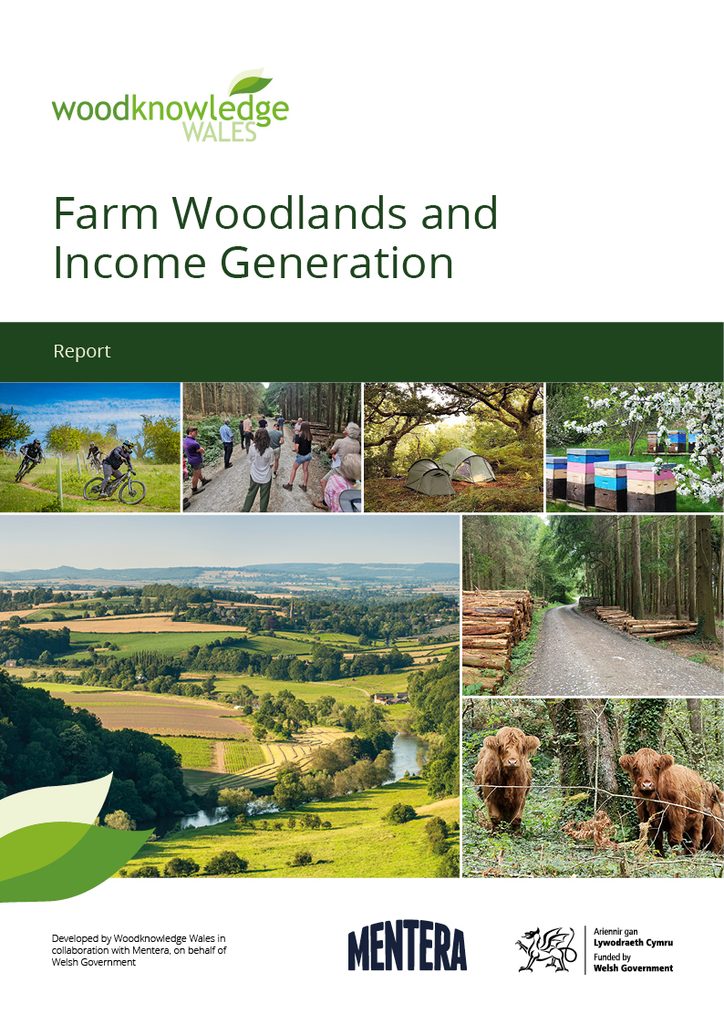
The Farm Woodlands and Income Generation project was commissioned by Welsh Government to explore how woodland and trees can play a more active role within Welsh farm businesses. The project considered opportunities to generate or retain economic value through sustainably harvested timber, non-wood forest products, woodland-based services, agroforestry and associated rural enterprises, while recognising the wider environmental and social benefits delivered by woodland and trees.
The project was undertaken in the context of Making Wood Work for Wales – the Welsh
Government’s Timber Industrial Strategy – and the introduction of the Sustainable Farming
Scheme (SFS). Historically, woodland and trees formed a functional part of many Welsh farms, providing timber, fuel, shelter and other products and benefits.
The project explored how this relationship might be strengthened within contemporary farming systems,
helping existing and new woodland and trees contribute to farm business resilience, rural
economies and communities, and sustainable land management.
The project brought together evidence review, case-study development, farmer and stakeholder engagement, knowledge exchange and user testing.
Welsh, UK, European and international evidence was reviewed, alongside previous Welsh Government, Woodknowledge Wales research and project work. Existing case studies were collated and new Welsh examples developed to explore opportunities, barriers, costs and benefits, routes to market and lessons that may be transferable to other farms.
Download the report in pdf format here.
