Woodland Creation in Minecraft Education
DESCRIPTION
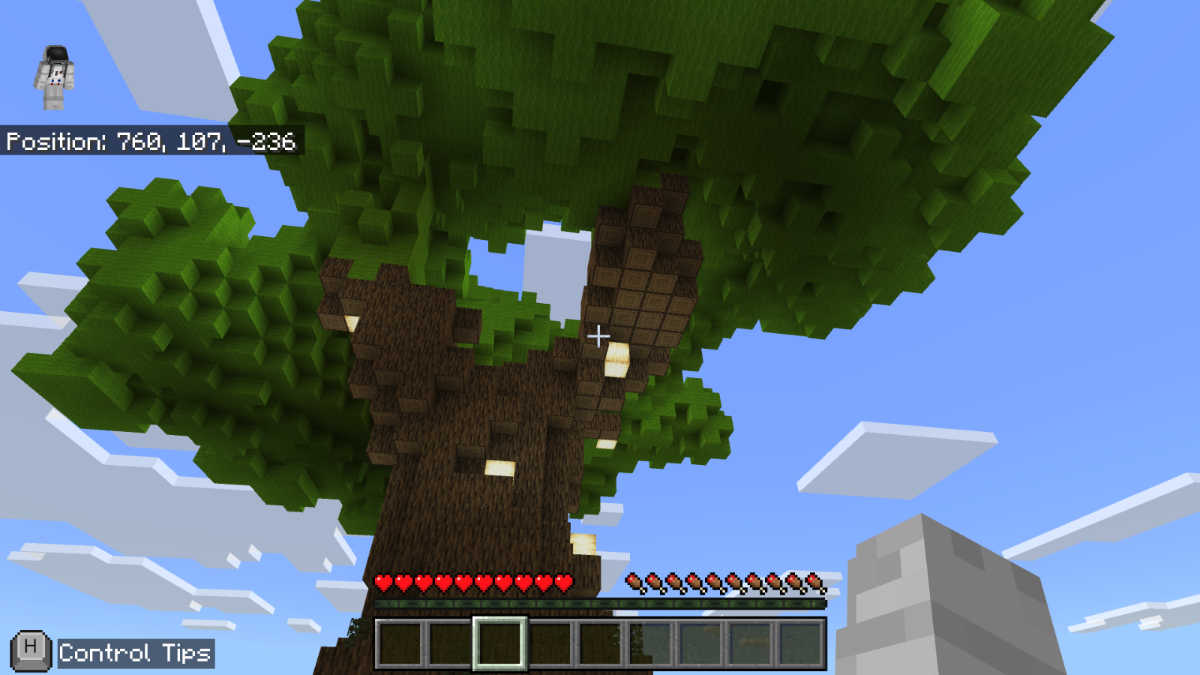
This teaching pack supports a multi‐lesson project where learners design a new woodland using Minecraft Education Edition. The lessons introduce tree species selection, woodland planning, and the eco-system services that these provide.
Learners will identify how woodland designs can provide benefits to wider eco-systems, including for human society and also for the general well-being of the Planet. This project covers many aspects of the Science and Technology Area of Learning and Experience (AOLE). Learning objectives are mapped to what matters statements in the AOLE. In order to understand the meaning of designing a woodland and what defines an eco-system service involves substantial research. A range of reading techniques, such as close reading, skimming and scanning will also develop as part of this research. The project provides the learners with opportunities to develop their writing skills, especially in the initial research and planning phase and via the evaluation phase at the end of the project. Critical thinking and problem- solving are at the heart of Science and Technology when analysing problems to develop models, solutions and innovations. This is an integral part of this project especially so during the woodland creation phase. When developing their woodland designs from their plans, learners will be making decisions and solving problems sub-consciously as part of their thinking processes. Planning and organisation are key in scientific and technological processes and learners will be organising and planning their projects and ideas, while setting their own goals within distinct requirements. They will also critically evaluate their own progress and results to further improve their ideas and outcomes.
OVERVIEW
This Mine project has been developed to enrich the delivery of the Curriculum for Wales. Although specific AoLE have been identified in this scheme of work (SoW) these are not prescriptive. Educators should interpret this SoW and lesson support documentation and apply accordingly to the relevant age groups in terms of breadth and depth of application (and considering any other relevant AOLEs). At the heart of the Hwb Minecraft: Education Edition projects is the development of the four core purposes of Curriculum for Wales and the underpinning integral skills of creativity and innovation, critical thinking and problem-solving, personal effectiveness and planning and organising.
Areas of Learning and Experience
- Science and Technology
- Humanities
- Expressive Arts Cross
Cross Curricular Skills
- Literacy
- Numeracy
- Digital competence
- LCF
- DCF
STAGE 1: INTRODUCTION AND RESEARCH – WHY PLANT WOODLANDS?
Learning Objectives
During this stage learners should be introduced to the project and initial research carried out into understanding the role of woodlands.
Objective 1: Leaners to understand what trees, woodlands and forests are.
Objective 2: Leaners to understand the range of eco-system services that trees and woodlands provide.
Objective 3: Learners to research examples of different woodlands and forests, locally and globally.
Lesson Elements:
- Class discussion about trees and woodlands
- How do the learners experience trees and woodlands (locally, visiting)
- Challenge pupils to define eco-system services
- Create a mind map about trees and woodlands and how they support different eco-systems including supporting bio-diversity and tackling climate change.
- Set an extensive writing piece under the title: “Why Woodlands matter”
- Draw a simple diagram showing how forests support wildlife.
STAGE 2: PLANNING
Learning Objectives
In this stage, the learners will plan their woodland design on paper. The learners will use the knowledge acquired during the research stage and annotate the plan accordingly. The woodland design must include a mix of at least THREE different tree species and be designed to provide at least TWO ecosystem services.
Objective 1: To identify the requirements needed to design and plant a woodland with a mix of three tree species and two eco- system services.
Objective 2: To create a woodland “design specification” based on findings from objective 1.
Objective 3: To create a 2D plan of a new Minecraft: Education Edition woodland.
Objective 4: Explain the tree species mix in the woodland and how the design provides at least two eco-system services.
Lesson Elements:
- Draw up a woodland design specification. Provide some 1cm grid paper to the learners and the ratio of 1cm = 1 Minecraft block is explained. Please Note: the woodland should be no bigger than 64 blocks wide by 64 blocks deep by 64 blocks in height.
- Birds eye view of the woodland planned on paper
- Leaners are encouraged to add elements to evidence the eco- system services provided e.g. pathways, wildlife, sitting areas, water, etc.
- Learners must annotate their work describing the tree species mix in the woodland and how it provides at least two eco-system services.
STAGE 3: WOODLAND CREATION
Learning Objectives
In this stage, the learners will begin to create their woodland following their plan.
Objective 1: Create trees, soil types and ground cover using a mix of materials provided within the game.
Objective 2: The use of structure blocks should be considered as part of the creation stage. These will provide an opportunity to reproduce individual (or small groups) of trees to quickly expand the woodland. Encourage strategies to avoid obvious repetition in order to encourage diversity in the woodland design. A useful tutorial in using structure blocks can be found here: https://www.youtube.com/watch?v=Jjjnpu6v0O4.
Objective 3: Ensure at least three tree species are used.
Objective 4: Learners should create the woodland to provide at least TWO ecosystem services.
Objective 5: Learners should create a chalkboard within the woodland area describing the tree species mix they have used and the two eco-system services the woodland provides.
Objective 6: This is where knowledge of structure blocks and their use is essential. A structure block can encompass any object that is 64 blocks3 or smaller. Capture and export the entire woodland using one structure block.
Lesson Elements:
- Login to Minecraft Education Edition and import the Forest Nation World map (forestnationworld.mcworld) from the Woodknowledge Wales website.
- Ride the roller-coaster to the Forest Nation Hub and then travel to the Woodland Creation Zone.
- Create a woodland in the Woodland Creation Zone.
- Export the woodland using a structure block and save in the learner’s home drive on the school network.
STAGE 4: IDENTIFYING IMPROVEMENTS
Learning Objectives
During this stage, learners are encouraged to view other learners work and get inspired to improve their own work.
Objective 1: To identify strengths and weaknesses of their builds.
Objective 2: To suggest improvements for their builds and apply the improvements.
Objective 3: To share ideas with peers
Lesson Elements:
- Small group discussion about their woodland designs.
- Showcase designs to small groups.
- Apply changes/improvements to woodland designs.
- Share ideas and inspire each other.
STAGE 5: EVALUATION AND PRESENTATION
Learning Objectives
In this stage learners will evaluate their builds against their initial plans (developed in Stage 2). Where improvements were made these should be explained as well as noting the successful parts of the build. Learners should present their build and evaluation using the Book & Quill (Tutorial here: https://www.youtube.com/watch?v=VO- U1L0Zw2Q) .
Objective 1: Evaluate strengths and weaknesses of build.
Objective 2: To use Minecraft: Education Edition features: camera, book and quill, portfolio.
Lesson Elements
Learners should do the following:
- Revisit the design specification.
- Identify specific elements of the build that meet design requirements.
- Use the book and quill to record and demonstrate their understanding of the role of trees, woodlands and forests in society and the environment.
Further Activities
Further activities that the school might consider extending the learning gained from this project might include:
- Use structure blocks to import all learners woodlands into a single Minecraft Education World thereby making a unique forest and woodland landscape.
- Conduct a local woodland field visit.
- Calculate estimated carbon storage of the woodland. *
- Invite a forestry professional to discuss woodland management. *
- Recreate local woodlands of interest.
- Partner with community groups to help design new woodlands.
- Explore ways that the learning developed here can support projects within the National Forest for Wales Programme. * Contact Woodknowledge Wales for more advice.
