Reports
Understanding how the timber supply chain can deliver a range of solutions in the natural and built environment. Summary The Home-Grown Homes Project (2018 to 2026) has shown how a strong local timber supply chain can deliver genuinely low-carbon social housing while advancing Welsh Government priorities in decarbonisation, affordable housing, and forestry. This is the…
Understanding Woodknowledge Wales’ work to support the housing sector in reducing embodied carbon through the development and rollout of the Early Stage Embodied Carbon Tool (ESECT). Summary This report outlines Woodknowledge Wales’ development, engagement, and rollout of the Early Stage Embodied Carbon Tool (ESECT) to support the housing sector in reducing embodied carbon. The tool…
Continue Reading Early Stage Embodied Carbon Tool (ESECT): Progress, Engagement and Early Impact
Understanding why new homes often underperform in use and how a Quality Assurance pathway could help close the performance gap and deliver better homes in Wales. Summary New homes in Wales frequently use more energy than predicted, leading to higher bills, discomfort, condensation and mould. This “performance gap” is preventable through better design, construction and…
Why is home-grown structural timber often seen as inferior for timber frame manufacturing in Wales and are there practical ways to improve its stability, strength and suitability for timber frame construction? Summary Wales needs 14,000 new low-carbon homes per year, yet home-grown structural timber currently makes up only a tiny fraction of material used in…
Continue Reading Understanding the Performance of Home-Grown Timber for Timber Frame Manufacture
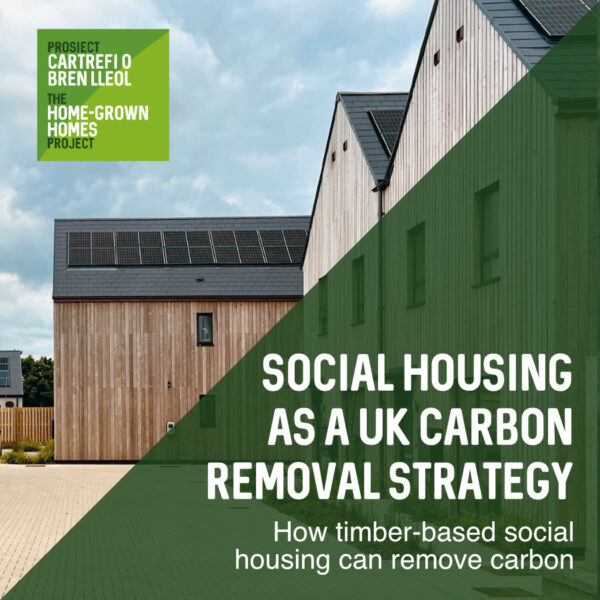
How timber-based social housing can deliver scalable carbon removal, align with UK net zero targets, and unlock economic, social, and policy opportunities. Summary This report demonstrates how social housing can act as a large-scale carbon removal strategy through the use of timber and other biogenic materials. Wood in construction is a market-ready, scalable solution that…
Continue Reading Social Housing as a UK Carbon Removal Strategy
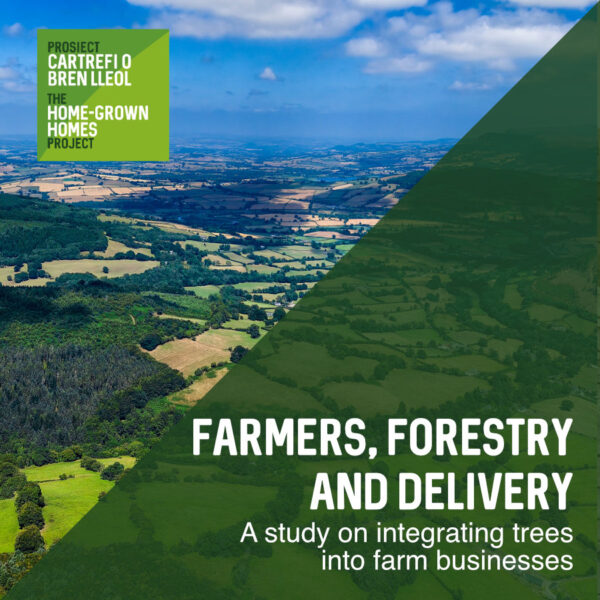
This study explores the experiences of upland farmers in mid-Wales who have established woodland on their farms, alongside insights from forestry advisers working with farming businesses across Wales. It examines the motivations, challenges and opportunities associated with integrating trees into farm businesses. Summary This report brings together perspectives from farmers who have already established woodland…
Continue Reading Farm Woodlands: Insights from Early-Adopter Farmers in Mid-Wales
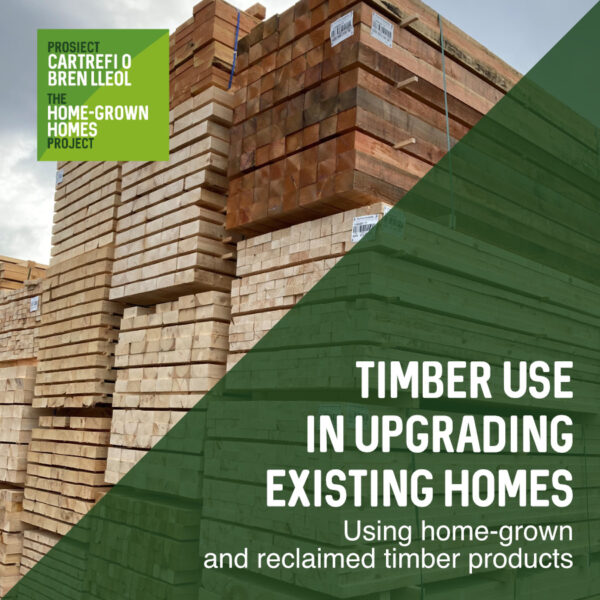
An exploration of opportunities for using home-grown and reclaimed timber products – including joinery, insulation and sawn wood – in the retrofit, repairs, maintenance and improvement (RRMI) of social housing in Wales. Summary Retrofit, repairs, maintenance and improvement (RRMI) represent a massive and growing market, with significant investment planned in Wales to upgrade the ageing…
Continue Reading Timber in Retrofit, Repairs, Maintenance and Improvement
The findings from a series of webinars and a roundtable which explored how reclaimed and cascaded wood can strengthen the UK timber sector, reduce carbon emissions and support the Welsh Timber Industrial Strategy. Summary This report captures the outcomes of a 2025–2026 event series organised by Woodknowledge Wales in partnership with ASBP and Built by…
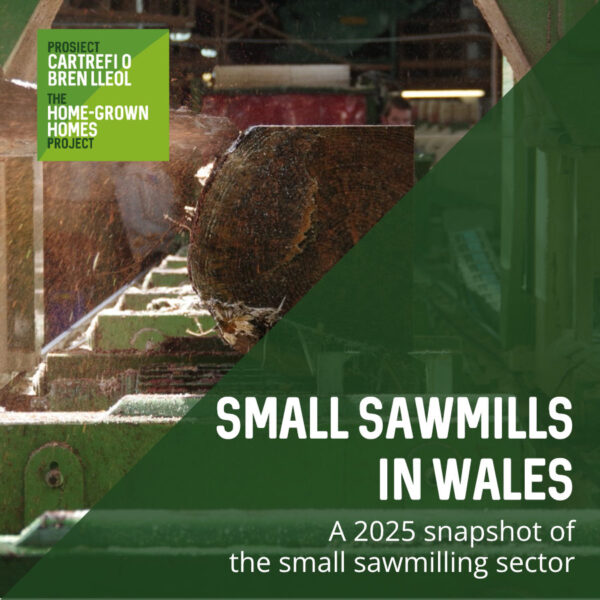
This report provides a concise, updated quantitative snapshot of Wales’ small sawmilling sector in 2025. Wales is at a turning point for its timber industry, yet the picture we have of our sawmilling sector is incomplete. National figures show broad trends, but they are not broken down for Wales which has a small number of…
Continue Reading Insights from Woodknowledge Wales Small Sawmill Survey – October 2025
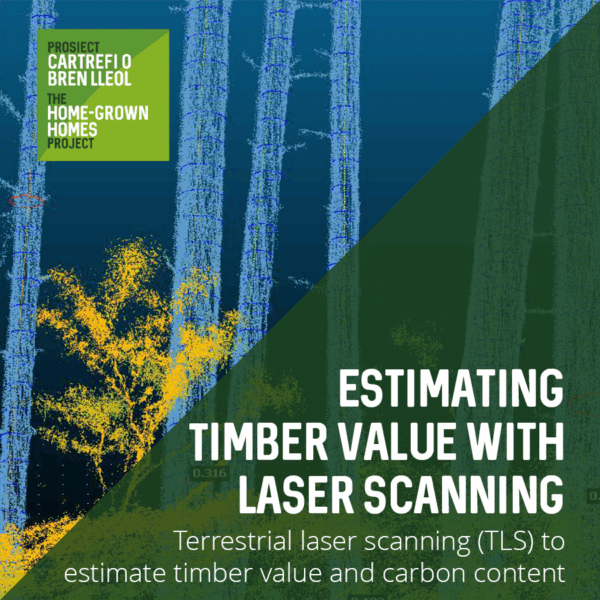
Research shows terrestrial laser scanning (TLS) can accurately estimate timber value and carbon content in woodlands enabling smarter woodland management and improved carbon accounting
Continue Reading Estimating timber value and carbon in complex woodlands using laser scanning
Unlocking climate, economic and social value through afforestation, sustainable forest management and circular wood use

A report summarising Home-Grown Homes research undertaken by Woodknowledge Wales, the BioComposites Centre and the ASBP that seeks to redefine the role of timber and other biogenic materials in construction
Continue Reading Using Wood in Construction as a significant Greenhouse Gas Removal Mechanism

New consolidation and recommendations report and Minecraft-based learning tool explore how education can support forest and timber careers

New report explores how the National Forest for Wales can boost timber supply for construction by supporting sawmills and sustainable woodland management practices
Continue Reading Opportunities for More High Value Timber from the National Forest

This report explores how woodland creation and timber use in Wales can enhance ecosystem services, supporting climate goals, rural economies and community wellbeing
Continue Reading The Ecosystem Services Impacts of Woodland Creation and Timber Products

Forestry and timber industries face a critical skills crisis. This report explores bold, collaborative action to regenerate careers, communities, and climate resilience across Wales
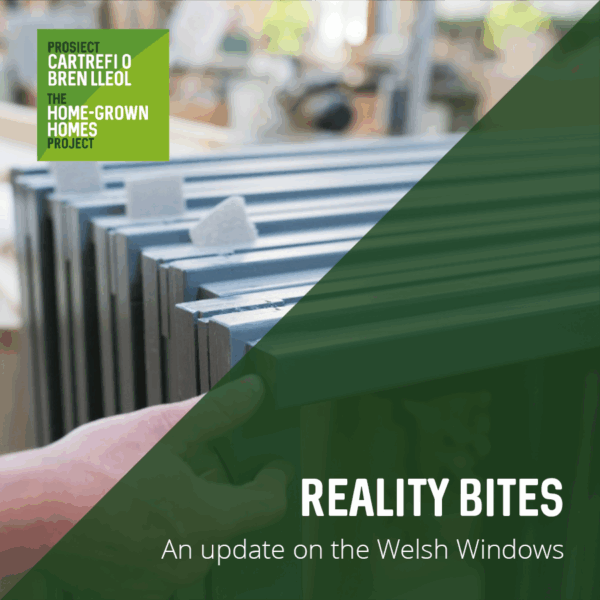
It all sounded so straight forward: Bring some interested joinery businesses together, agree a joint window specification based on the type of windows they currently manufacture to PAS24 standard, define protocols and processes, then get certification. Done. From the outset, we knew it would be more complex than that, of course. There are the technical…
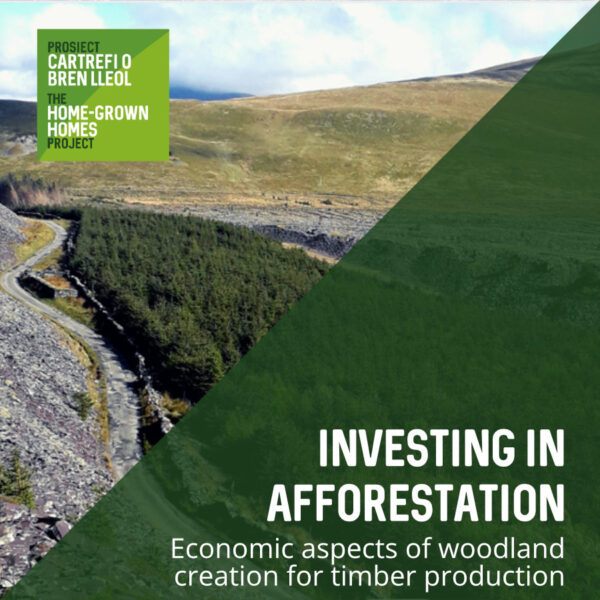
The decision to invest in an afforestation project with the primary aim of producing timber may involve many personal and environmental factors alongside financial considerations. Adoption of a forestry enterprise within a farming unit represents a change in land use and a long-term investment of land, labour and resources. Financial evaluation provides a structured and…
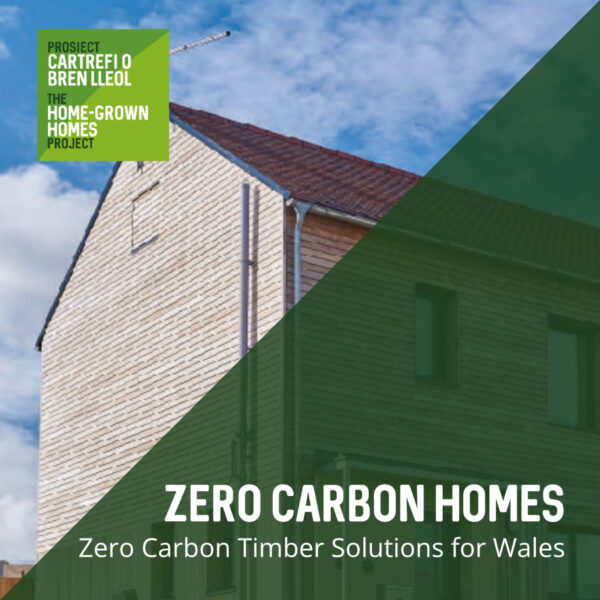
What is the zero carbon timber housing solution for Wales? This document proposes a range of timber build solutions. Results are based on the analysis of an appropriate and future proofed definition for ‘zero carbon’, followed by design and calculation to develop an understanding of the quantifiable factors of embodied and operational carbon. Using a…
Continue Reading Zero Carbon Homes—Zero Carbon Timber Solutions for Wales
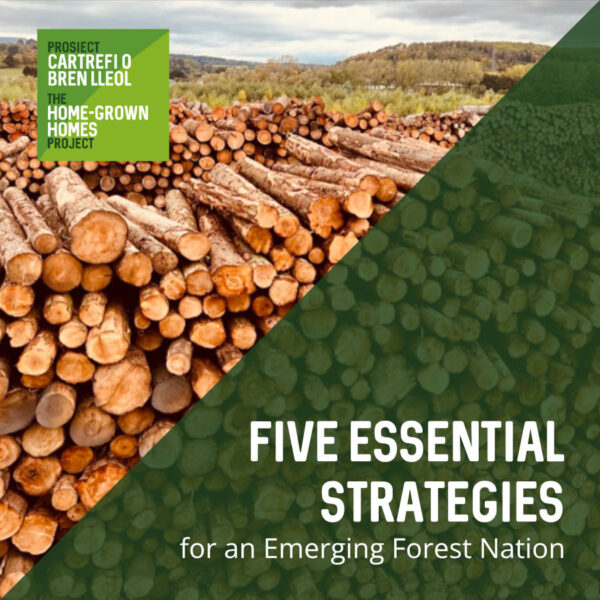
Wales is not a forest nation. Wales is a sheep, beef and dairy nation. Wales is a steel nation. Like many nations, Wales is the economic country it is, not by political design but largely because of historical accident. And there has never been a better time or more reason to change. We have left…
Continue Reading 5 Essential Strategies for an Emerging Forest Nation
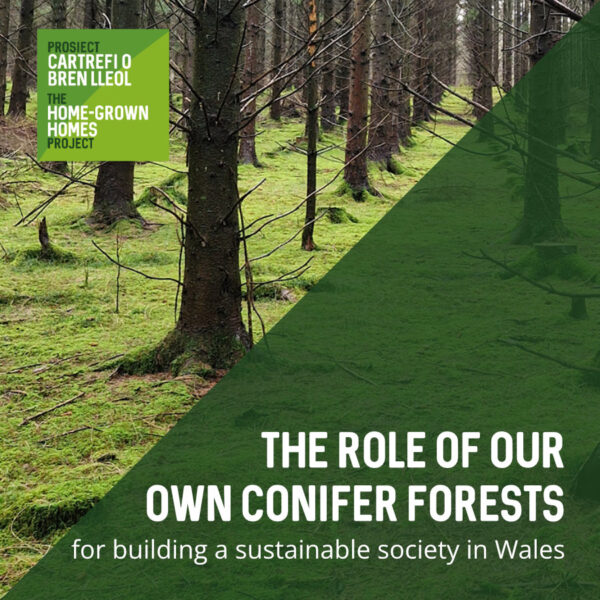
Despite wide recognition of their value, plantation forests are critically misunderstood and undervalued in Wales. Plantation forests comprise around 7% of the planet’s forest area whilst sustainably supplying over 50% of industrial roundwood. This report looks at myths and tropes around home-grown timber and considers research results from wood science and socio-economic aspects across planting,…
Continue Reading The role of our own conifer forests for building a sustainable society in Wales
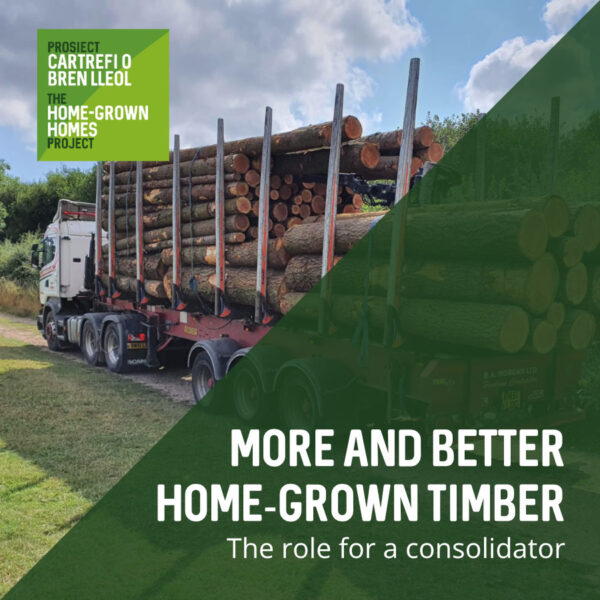
What might a business plan for the supply of home-grown timber to the Welsh housing sector look like, if it is to be closely integrated with the ownership and management of the timber resource in Wales? Additional capacity in the sector has been identified in three key areas: secondary processing capacity; in undermanaged forestry and…
Continue Reading More and Better Home-Grown Timber—The role for a consolidator
From the TV presenters of Countryfile to the ever-escalating claims of political parties in the last UK elections, it seems everyone wants to plant more trees. Reasons vary from carbon capture, amenity, and biodiversity to production of usable timber, as do levels of ambition. Amongst the most widely quoted targets, The Committee on Climate Change…
The purpose of the Home-Grown Homes project has been to identify and test out interventions that could have a transformative impact on the Welsh timber construction supply chain and on the delivery of low carbon social housing in Wales. Housing, timber manufacturing and forestry are distinct areas of activity. This project is an exploration of…
Why would it be beneficial for Welsh society to build a wood economy? The ‘Serious about Green?’ report takes a closer look and analyses the economic and social parameters. The report is authored by the team at Foundational Economy Research, led by Karel Williams. It brings together the Woodknowledge Wales forest industries agenda with foundational…
Continue Reading Serious About Green?—Building a Welsh wood economy through co-ordination
The future building stock is the most effective and most immediate opportunity for carbon reduction and long-term carbon storage. By creating a new economic model for monetising the carbon reduction and storage capacity of the future building stock, the use and specification of low-carbon and carbon-storing materials could be incentivised. Woodknowledge Wales have been working…
New woodland creation is one of the most cost-effective ways of reducing carbon emissions and offsetting our nation’s carbon footprint. The combination of an undersupply of our own timber in Wales and the ambitions of Wales and the Welsh Government to create new woodlands means that an organisation interested in creating new woodlands can play…
How to reduce embodied carbon in social housing developments? This article highlights key questions and answers for strategic leadership teams.
