How timber-based social housing can deliver scalable carbon removal, align with UK net zero targets, and unlock economic, social, and policy opportunities.
Summary
This report demonstrates how social housing can act as a large-scale carbon removal strategy through the use of timber and other biogenic materials. Wood in construction is a market-ready, scalable solution that not only reduces emissions but actively removes and stores carbon within buildings.
Through three real-world exemplars—Tai ar y Cyd, Agile Homes, and MAKAR—the report shows that high-performance, timber-rich housing is already being delivered at scale. These projects illustrate how carbon storage, social value, and innovative delivery models can be integrated into mainstream housing.
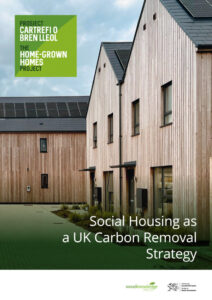
The analysis highlights that timber-rich homes can store significantly more carbon than conventional construction, with up to 20 times greater greenhouse gas removal potential compared to masonry homes. Prioritising home-grown timber and domestic manufacturing further increases this benefit while strengthening UK supply chains and creating economic value.
To unlock this opportunity, the report calls for targeted policy action, including mandating timber in public procurement, creating financial incentives for verified carbon storage, supporting UK manufacturing, and establishing robust carbon verification systems. Together, these measures can position social housing as a cornerstone of the UK’s net zero strategy.
